Author Archives | Shannon

Two Extreme Climates. One Tiny Backpack. What I Packed.

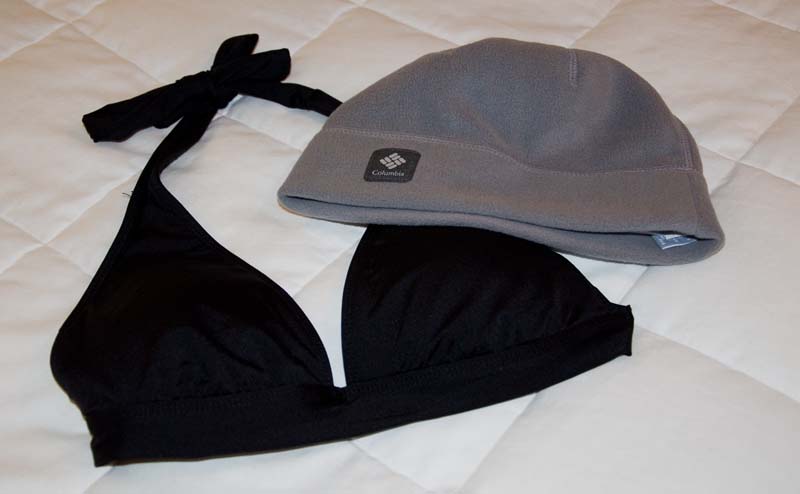
Hot and cold tops

Hot and cold tops

When I see women traveling with backpacks larger than mine, sometimes I feel a flash of envy. What are they stashing in the extra space? More shoes? A hair dryer? Faced with the challenge of packing for a six-week trip to Hawaii and Alaska in a 40-liter backpack, I almost gave in to size envy and upgraded.

I’m glad I didn’t. Despite the fact that my backpack was purchased for a nine-week Central American trip that required solely hot weather wear, the same reasons I originally selected it still trumped the enticement of another pair of shoes.

First, a larger backpack would mean frequently being separated from it—checking it at airports, surrendering it during bus rides or airport taxis—and I’m kind of neurotic that way. I like arriving at my destination knowing I’ll have my clothes and other essentials in hand. With six flights on the Seattle-Hawaii-Alaska-Seattle itinerary alone, that would be six times a bag could go astray; and since we’re frequently in places for a short amount of time, often only a night or two, reuniting with an errant bag could be difficult.

Second, being on the move so much means having to re-pack every few days. The less stuff, the shorter amount of time that chore takes.

Third, the bigger the bag the heavier it is to tote around.

Read More…

Meet Tim

Tim the Manta Ray

I’m no Jacques Cousteau, but for a brief while I felt as if I might have been. Gliding by just a few feet below me was a several-hundred-pound manta ray, his winged silhouette illuminated by bright lights shining down from the water’s surface.

Tim is one of numerous manta rays that come to feed in a cove off Hawaii’s Kona coast, one of the few places where you’re almost guaranteed a sighting. The ocean dwellers—whose wing spans generally range from three to twelve feet—know that a buffet awaits them there each evening. The lights in the water attract plankton, which in turn make a tasty meal for the manta rays—and great spying ground for snorkelers and divers.

Read More…

Kilauea Lava Flow at Night

Pele Puts Out

Hike to Kilauea Volcano, Hawaii

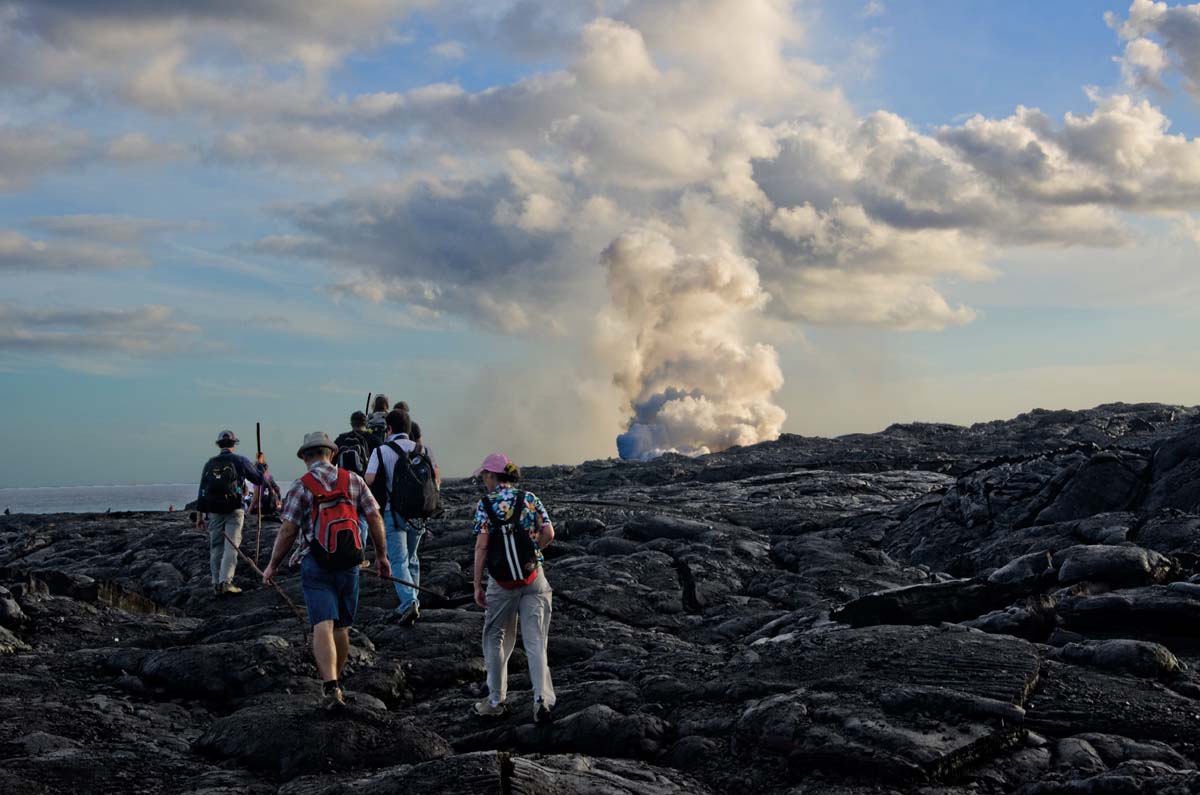
It’s one of the most awe-inspiring sights I’ve ever seen: molten lava flowing into the Pacific Ocean. From our front-row seats near the edge of a cliff, we watched in wonder as Pele, the volcano goddess of the ancient Hawaiians, performed spectacularly.

Read More…

Volcanoes National Park, a Warm-Up Act

Halema’uma’u Crater Night Glow, Volcanoes National Park, Hawaii

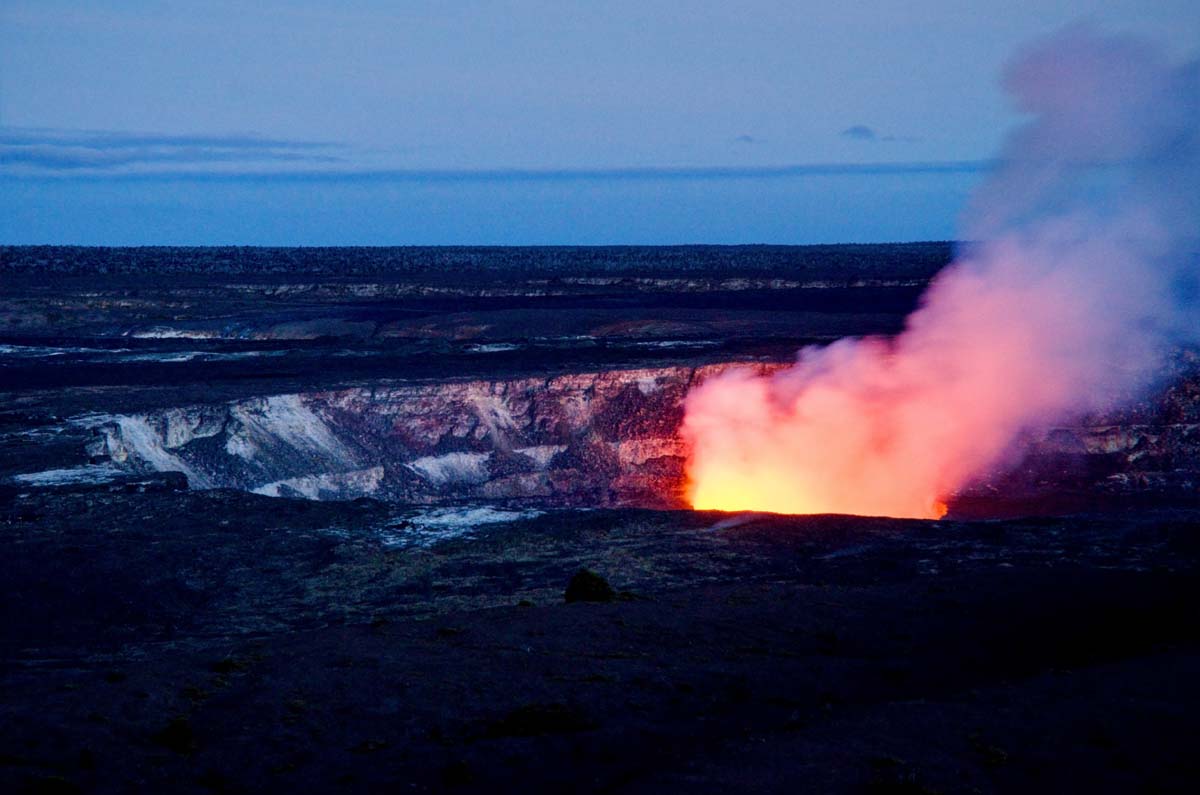
After seeing some of Pele’s handiwork first hand, but before getting up close and personal with the volcano goddess, we had the opportunity to glimpse her from afar. Our first night in the Big Island’s Volcano region, we stood on a viewing platform at Hawaii Volcanoes National Park. In the distance, a giant plume of smoke rose from Halema’uma’u Crater, part of Kilauea, one of the most active volcanoes on earth.

Visitors have long been dazzled by Kilauea—which has erupted more than 60 times since 1823—including Mark Twain, who happened by in the late nineteenth century. As we watched that evening, excitement grew among the crowd standing with us as an orange glow gradually became more and more vivid in the deepening darkness.

This tantalizing hint of Pele’s power was undoubtedly a high point, but the next day we returned to explore the park to see what else it had to offer.

Read More…

Hawaiian Royalty

Iolani Palace Honolulu Hawaii

It’s good to be the king.

When David Kalakaua ordered a new palace built in 1879 in Honolulu, the Hawaiian kingdom’s capital and an increasingly important hub for international trading, the monarch mandated that no expense be spared. The building was intended to impress, lest overseas VIPs think his realm in the middle of the Pacific was a backwater.

Iolani Palace was decked out with cutting-edge amenities like indoor plumbing, a telephone, and electric lighting, which it had before the White House or Buckingham Palace. Constructed in a unique architectural style, the building melds European-inspired features with traditional Hawaiian elements such as wide, wrap-around lanais.

The only official state residence in the U.S. once occupied by royalty, Iolani Palce looks like the domain of an Italian duke rather than a dwelling in the tropics. While admiring the architecture and décor is reason to visit the residence, it’s more than just a pretty façade. Roaming its gilded rooms with a self-guided audio tour reveals intriguing stories about what played out within them, well before Hawaii became the 50th U.S. state.

Read More…