Ever since our first experiment with AirBnB (where we snagged a New York City...



Ever since our first experiment with AirBnB (where we snagged a New York City...

Just imagine, you’re in the Rome airport staring down the barrel of a...

It doesn’t seem possible, but it is completely true. Traveling 365 days every...

A chair whimsically perched on stilts sits on the edge of Winery Lake, one of some 2,000 works of art at the di Rosa. Tucked among the vineyards in the Napa Valley, the collection is considered the most significant holding of Bay Area art in the world.
A visit to the di Rosa is not a traditional museum-going experience. Guided tours—the only way to see the full collection—combine indoor and outdoor viewing in various areas of the property, once home to vintners and art enthusiasts Rene and Veronica di Rosa, the collection’s founders. The eclectic assortment features everything from painting and sculpture to ceramics and video, created from the 1960s to the present.
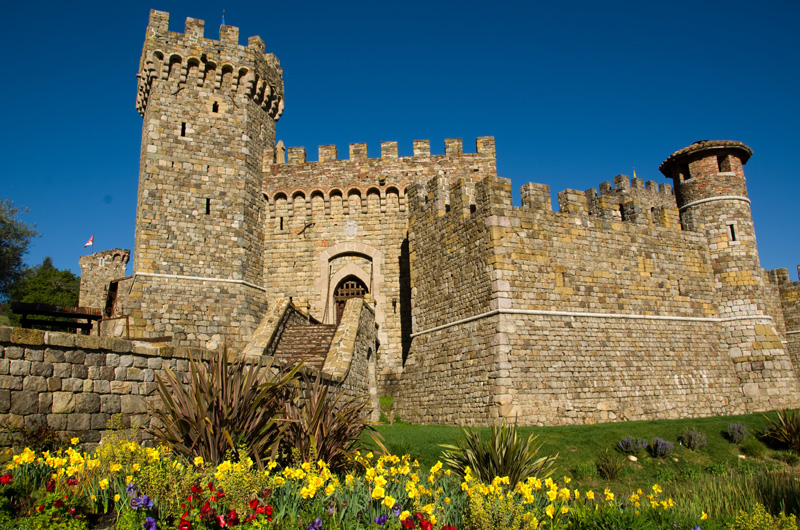
Castello di Amorosa
The world is better for eccentrics; the artists, entertainers, scientists and imaginers who see things no one before ever did and, by virtue of their vision, take the world in a direction it never previously knew existed. Eccentricity is also the reason you can tour an authentic 12th-century Tuscan castle in California’s Napa Valley.
Quibblers will no doubt deem the previous sentence a non sequitur. A Tuscan castle cannot, by definition, exist in California. Nor can this particular castle, completed in 2007, be described as 12th century. Yet, in important ways, it is both those things, and authentically so.
So what gives?
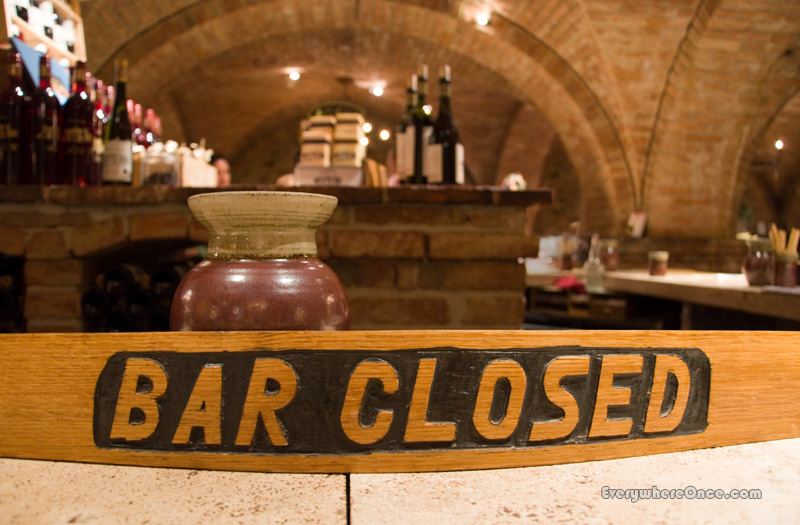
Sticker shock greeted us on our third and most recent visit to the Napa Valley. We remember when tasting rooms were economical places to discover wine. These days they can quickly become a budget buster, with tastings running about $20 a pop for a few thin pours. Now it’s often cheaper to bypass the samplings altogether and just buy a bottle instead.
The good news is that California wine country isn’t exclusively about the wine. Many vineyards are also competing for tourist attention by building lavish grounds and offering other attractions that are often completely gratis.











 Everywhere Once