Ever since our first experiment with AirBnB (where we snagged a New York City...



Ever since our first experiment with AirBnB (where we snagged a New York City...

Just imagine, you’re in the Rome airport staring down the barrel of a...

It doesn’t seem possible, but it is completely true. Traveling 365 days every...

National Steinbeck Center, Salinas, California
It was our second visit to Salinas, California and this time, just as last, we found ourselves spending the afternoon with an old friend; one whose own Great American Road Trip had not only significantly preceded, but also strongly influenced, ours.
During our stay it occurred to us that we really should share his story with our readers; some of whom may already know it but would nonetheless profit from a reminder. And as a writer of some accomplishment in his own right, we figured there could be no better way to introduce the trip that so inspired us than to hand over the reins and let him simply speak for himself.
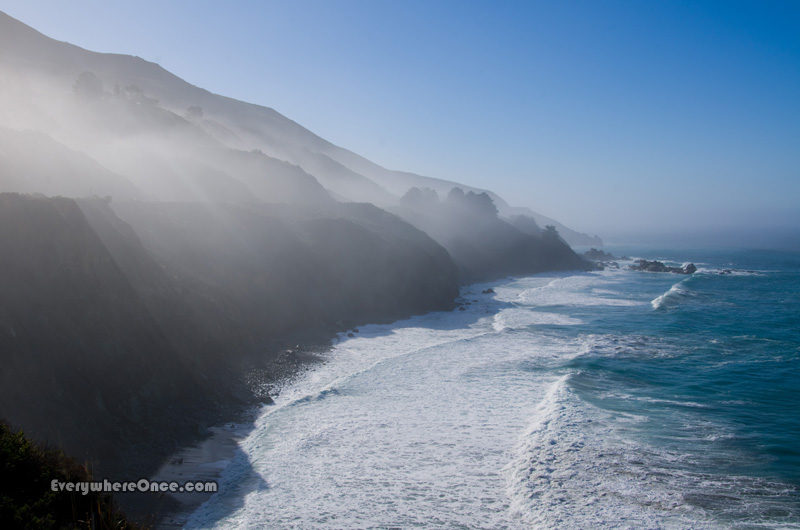
So mighty is Big Sur, its riches were too many to be showcased in a single post. Our tour through el sur grande continues…
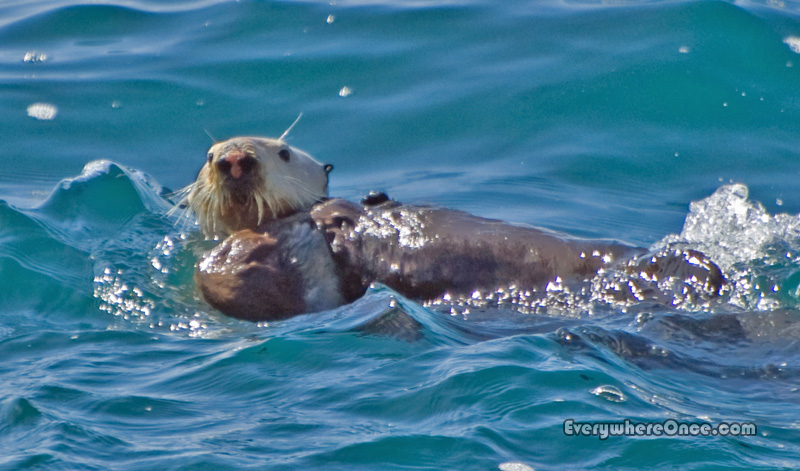
With only an approximate location and vague instructions to look for an iron gate along Hwy 1, we found the unmarked trail to Partington Cove on our second try. A short, steep hike leads through a wooded, wildflower-bedecked canyon before branching in two directions, one toward a secluded patch of rocky beach.

The other way leads through a century-old, 60-foot tunnel, once used to transport cargo onto ships and later a rumored rendezvous point for liquor smugglers during Prohibition. A wooden walkway leads to another rocky outcropping, where we spied on an otter frolicking in the water—our first sighting in the wild of the elusive creature, once nearly hunted to extinction.

Spanning a canyon along Hwy 1, the arched Bixby Bridge was completed in 1932 and styled to blend in with its surroundings. One of the world’s highest single-span bridges, topping out at 260 feet, it’s a popular backdrop for car commercials and a favorite spot for camera-wielding visitors, including us.

A $5 admission fee buys access to striking Pfeiffer Beach, where massive sandstone rocks stand among the waves just offshore. One boulder features a cutout in its center, as if framing the ocean vista, while purple-hued sand brightens up the beach, stained by minerals washing down from a hillside.

Books suspended from the ceiling adorn the Henry Miller Memorial Library
Since novelist and one-time Big Sur resident Henry Miller makes a cameo in my forthcoming book, Writers Between the Covers, stopping by his namesake Library—a nonprofit bookstore, arts center and live music venue (the likes of the Red Hot Chili Peppers have played there)—was on the agenda. As it turns out, it happened to be the only place in Big Sur where we could connect during our media blackout. The Library offers wi-fi to customers, and we lounged on their porch among the redwoods checking email and sipping Earl Grey tea in exchange for a small donation.
Before we showed up I had affectionately dubbed the place the “dirty Henry Miller” Library because of what I had learned about his salacious relationship with the writer Anaïs Nin in Paris during the 1930s. And the Library does indeed manage the interesting combination of being both literary and playfully dirty. Along with copies of Miller’s books, including Tropic of Cancer, which was banned for obscenity in the U.S. for nearly thirty years, on display were tomes for those looking to spice up their sex lives.

Valentines Day table at the Henry Miller Memorial Library
One of many writers and artists drawn to Big Sur, Miller lived in the area for fifteen years. In Big Sur and the Oranges of Hieronymus Bosch, he summed up the striking landscape by saying, “This is the face of the earth as the Creator intended it to look.”

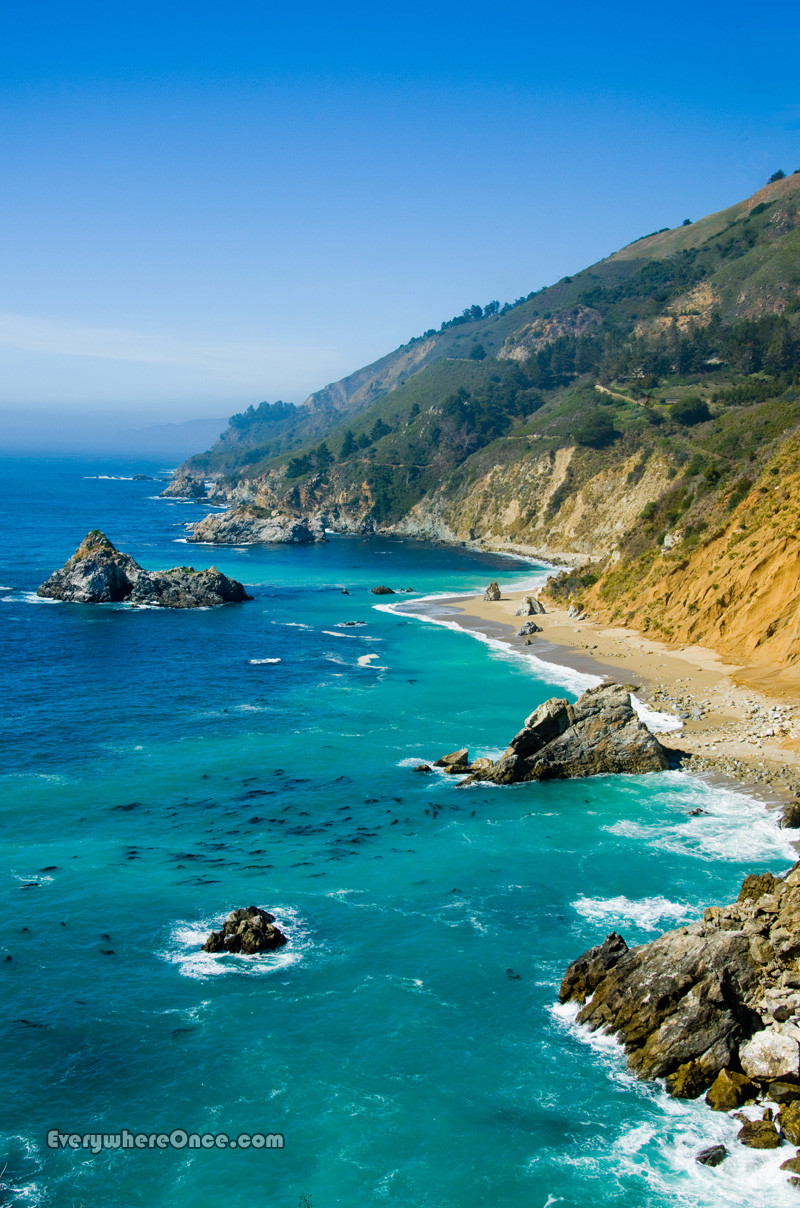
After spending time in the high-intensity urban sprawl of southern California, Big Sur seemed like an alternate realm. Remote and rugged, this 90-mile stretch of land is bordered by the Pacific Ocean and the Santa Lucia Mountains. A single, winding road, Highway 1, leads travelers north and south into and out of the area. Strict property laws have kept Big Sur largely undeveloped, and its three towns consist of only a few buildings each.
With four days to explore and expectations running high after catching a glimpse of jagged cliffs and dramatic waves on the drive in, we parked the RV and set out to see what “el sur grande” (the big south, as Spanish settlers called it) had to offer.

Remember the good old days of travel, when you relied on trusty Michelin Maps for directions and actually talked to locals to learn about area attractions? I sure do. Mostly, though, I remember how much all of that sucked.
Sure, we got by. On our first trip to France we somehow managed to get ourselves from a small town in Burgundy to the Loire Valley with only the aid of a giant atlas we hauled along in our even larger suitcases. All these long years later we still remember that trip, and our confusion driving through the city of Tours, as “The Angry Day.” Ahh, memories.
More recently we found ourselves unexpectedly thrown back into those dark ages during a four day stint in Big Sur, CA. No cell phone. No internet. No nothing.









 Everywhere Once