Ever since our first experiment with AirBnB (where we snagged a New York City...



Ever since our first experiment with AirBnB (where we snagged a New York City...

Just imagine, you’re in the Rome airport staring down the barrel of a...

It doesn’t seem possible, but it is completely true. Traveling 365 days every...

The autumn colors that adorned Zion National Park’s rosy canyon walls looked to me like they were drawn from a great impressionist painting. In honor of that thought, I figured I’d try something new and show Zion as it might have been portrayed by Monet (or, more likely, one of Monet’s significantly less talented students). Original photos here, here and here.
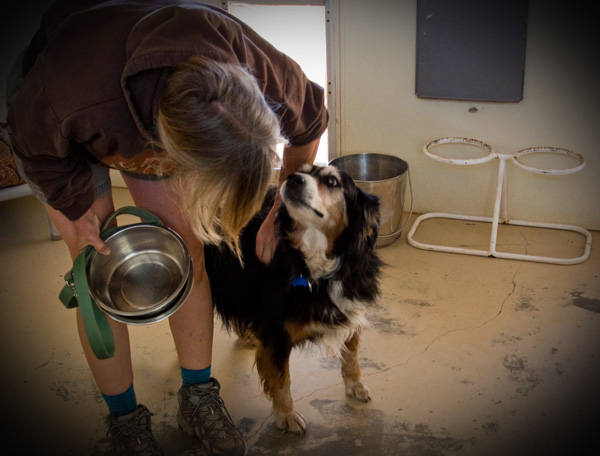
That’s approximately the number of animals euthanized in the United States each year.
They come to that end because of broken homes and busted dreams; because too few animals are spayed or neutered and because too many are deliberately bred; because their owners are completely out of options or simply out of patience.
It’s a shockingly high number. More than 10,000 every single day. For the most part those killings are conducted by shelters trying to free up room for the steady stream of new animals that come through their doors. The old, the sick and the unwanted are euthanized to give those animals more likely to be adopted a space and a shot. But the volume of new arrivals is so large that a typical shelter puts down 60% of the animals it receives.
If killing six in ten animals seems like a strange form of rescue to you, you’re not alone. Best Friends Animal Society in Kanab, Utah, thinks so too.

Buckskin Gulch in southern Utah is the longest and deepest slot canyon in the southwest and quite possibly the longest in the world. It also happens to be the first slot canyon we had the opportunity to hike.
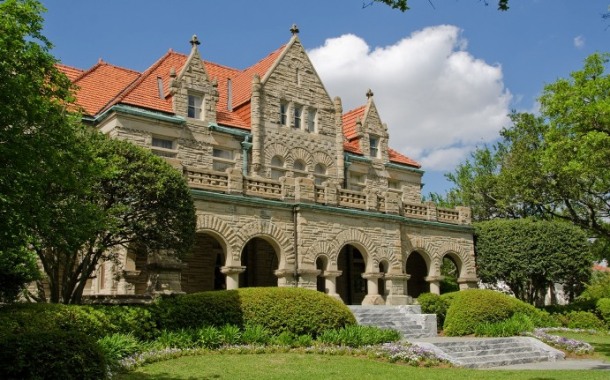
One of the things we always felt pressured by living in the U.S. was the subtle coercion of BIG. Big houses, big cars, big everything. There’s a lot to lament about big. It’s costly, it’s wasteful, it’s demanding. Every square inch of that bigness needs to be maintained and financed. It is, in our view, a horrible waste of time and resources.
Of course our view is a minority one. For the majority, big is desirable, it is status, and even an end unto itself. And because market economies like ours typically give the majority what it wants, we’ve seen a more than doubling of home sizes in the past 60 years. Not only are new homes being built bigger, vintage properties are torn down to make way for giants. In the process the stock of reasonably sized residences has declined, along with the options of the minority who prefer them.












 Everywhere Once