Fantasizing a world without work is one of our specialties at EverywhereOnce. So when we saw an opinion piece of the same name authored by conservative Times columnist Ross Douthat, it got our attention. Given his predispositions, it’s not surprising that he disapproves of the concept. Given ours, it’s not surprising that we find fault with his reasoning.
How to Become Fearless

Hey, that’s my ride!
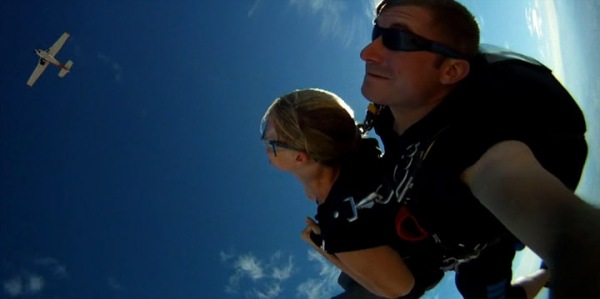
Editor’s Note: This article first appeared here on January 1, 2011. We’re publishing it again as a perennial New Year’s reminder. We also updated the headline photo to show one of the fears we faced since writing these words 12 months ago. Be sure to leave a comment and let us know what fears you overcame last year or about the ones you resolve to tackle in 2013.
————————————————————
In youth, the world is wide open. Life is about trying new things, pushing boundaries, discovering limits, and exploring a planet that is ripe with possibility. As time passes we surround ourselves increasingly with comforts and lose interest in discovery. Our propensity for boldness atrophies. Our longing to see around the next corner gradually succumbs to fear of the unknown. Our world shrinks.
It doesn’t have to.
Living Large in Small Spaces

One of the things we always felt pressured by living in the U.S. was the subtle coercion of BIG. Big houses, big cars, big everything. There’s a lot to lament about big. It’s costly, it’s wasteful, it’s demanding. Every square inch of that bigness needs to be maintained and financed. It is, in our view, a horrible waste of time and resources.
Of course our view is a minority one. For the majority, big is desirable, it is status, and even an end unto itself. And because market economies like ours typically give the majority what it wants, we’ve seen a more than doubling of home sizes in the past 60 years. Not only are new homes being built bigger, vintage properties are torn down to make way for giants. In the process the stock of reasonably sized residences has declined, along with the options of the minority who prefer them.
Giving Thanks for Today
For some strange reason I found myself thinking about super powers the other day. Not about how cool it would be to have one but mostly about how useless they’d be in the real world. Without a horde of super villains to fight against, what practical good is super strength anyway? For the most part comic book abilities seem better suited to creating mischief than doing anything productive or interesting. The one exception I happened upon was time travel. Not necessarily even to mess with stuff. You don’t need the ability to change the past or profit from a preview of tomorrow’s headlines to make time travel totally awesome. Simply being able to observe the universe unfold over a period longer than a human lifespan makes it a power worth having.
It would be fascinating enough to walk the streets of 22nd century America but what about in the year 3012? Imagine plucking someone from the Middle Ages and dropping them in Times Square. What a mind-blowing experience. The differences between today and the next millennium are likely to be even more dramatic given the accelerating pace of change. I imagine a future of increasing global harmony and prosperity and one where everyday technologies seem magical by today’s standards.
And yet we don’t know for certain what tomorrow holds. It’s possible that future generations will look back and see that the beginning of the 21st century marked the pinnacle of human achievement. It may be that there aren’t even any future generations to ponder such things. We may find that tomorrow is not such a great place to visit, let alone to live.
How to Get Lucky
On good days I accept it as a compliment; a sincere expression of admiration. Other times, though, it’s hard not to take the meaning literally.
“You’re so lucky.”
Lucky. The word hangs in the air like an accusation.
In many ways we are lucky. We’re lucky to have been born to middle class families in the richest country on earth. We’re lucky to have been raised by loving parents; to have received a good education; to have our health and all of our faculties. I’m immensely grateful, every day, for my good fortune.
In short, we’re lucky in the same way that millions of other middle class residents of developed countries are lucky. Everything else took effort, determination, sacrifice and, perhaps most importantly, a strong belief that we are the masters of our fate.
Which brings me to the other thing I hear when someone says “You’re so lucky:” capitulation. Capitulation to the vagaries of life. Surrender to imagined forces beyond our control. I hear in these words the sentiment “if only I were luckier, things would be different.” That’s a copout. We assign ourselves too easy a task in life when we ascribe so much of our condition to luck.