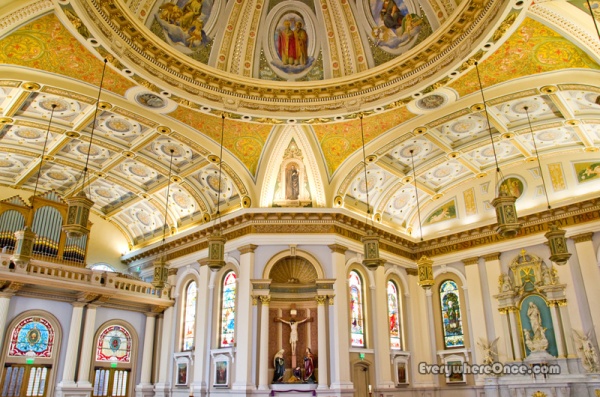
The Cathedral Basilica of St. Joseph
The downside of living in an RV is that when repairs need to be made, your entire residence is in the shop. The upside is that when your house is unavailable, it frees up time for additional sightseeing.
During a stopover in San Jose while the RV’s engine was being given a once-over, we sought out places that otherwise weren’t on the agenda. In the heart of Silicon Valley, we bypassed modern or tech-related for historical immersion.
Rosicrucian Egyptian Museum
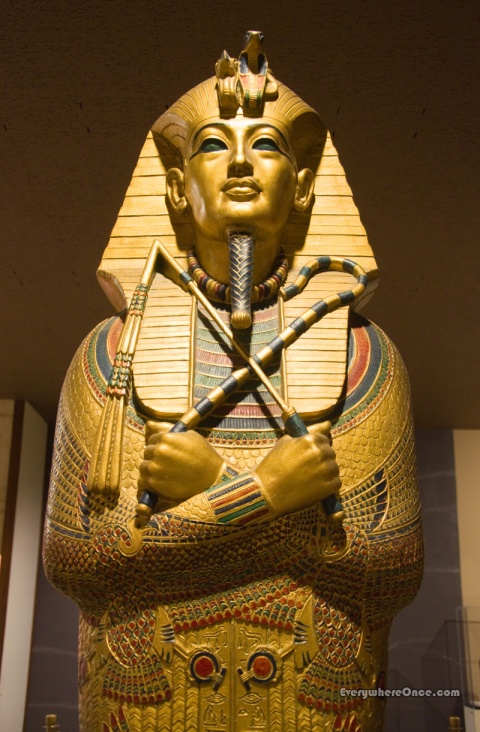
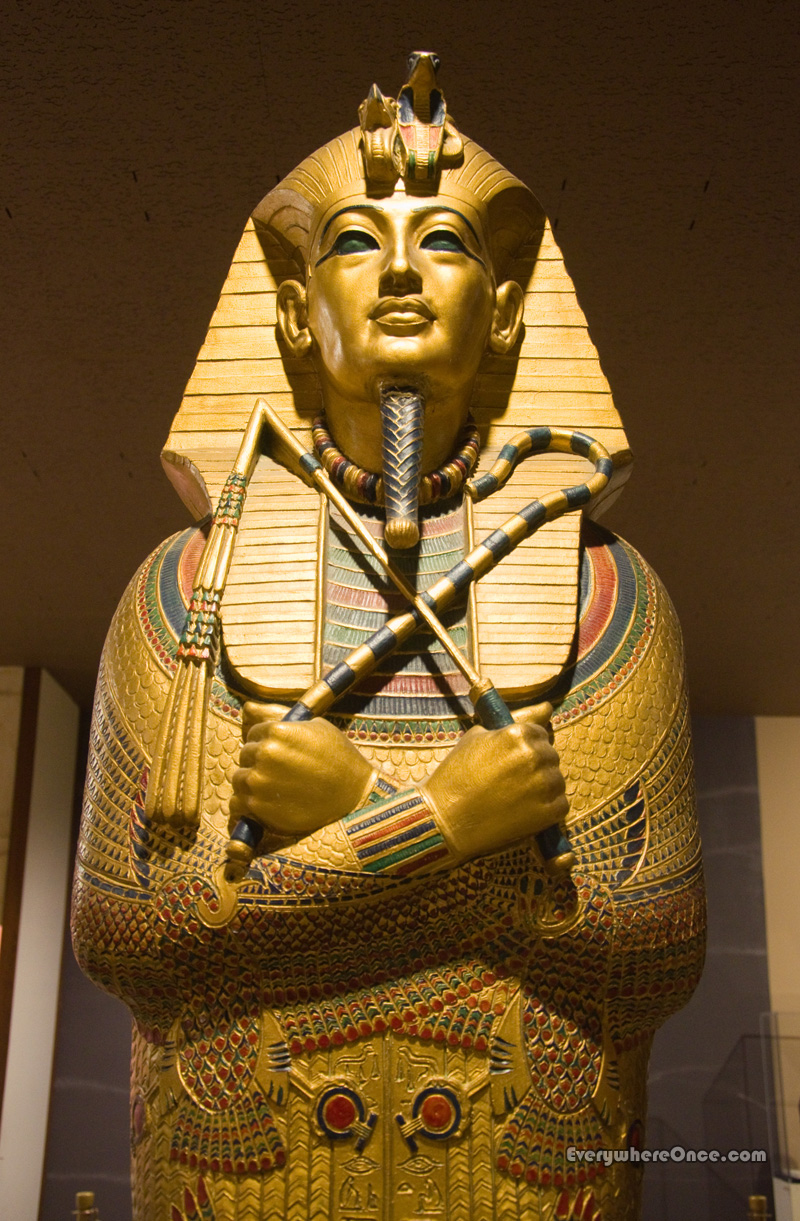
Replica of King Tutankhamun’s Sarcophagus
Where might a museum acquire a pair of sarcophagi? If your answer was the Neiman Marcus Christmas Book, the over-the-top holiday catalog featuring fantasy gifts like a jet pack and a $100K Versailles-inspired hen house, you would be right. In 1971, the Rosicrucian Egyptian Museum bought two ancient Egyptian coffins touted in a section of the catalog titled “His and Her Gifts for People Who Have Everything.” One of the sarcophagi came with an unexpected bonus: a mummy.
Burgeoning from a single artifact, a statue of Sekhmet, the lion goddess, to more than 4,000 items—including its Neiman Marcus purchases—the Rosicrucian displays the largest collection of authentic ancient Egyptian artifacts in the Western U.S. There is also a two-room, walk-through recreation of an ancient subterranean tomb.
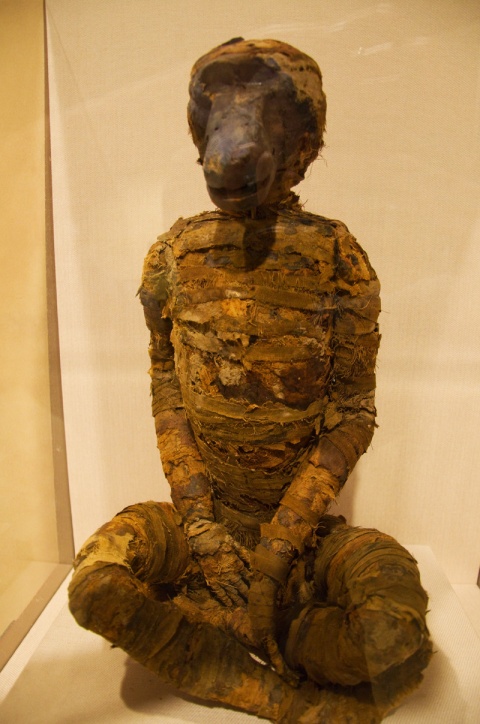
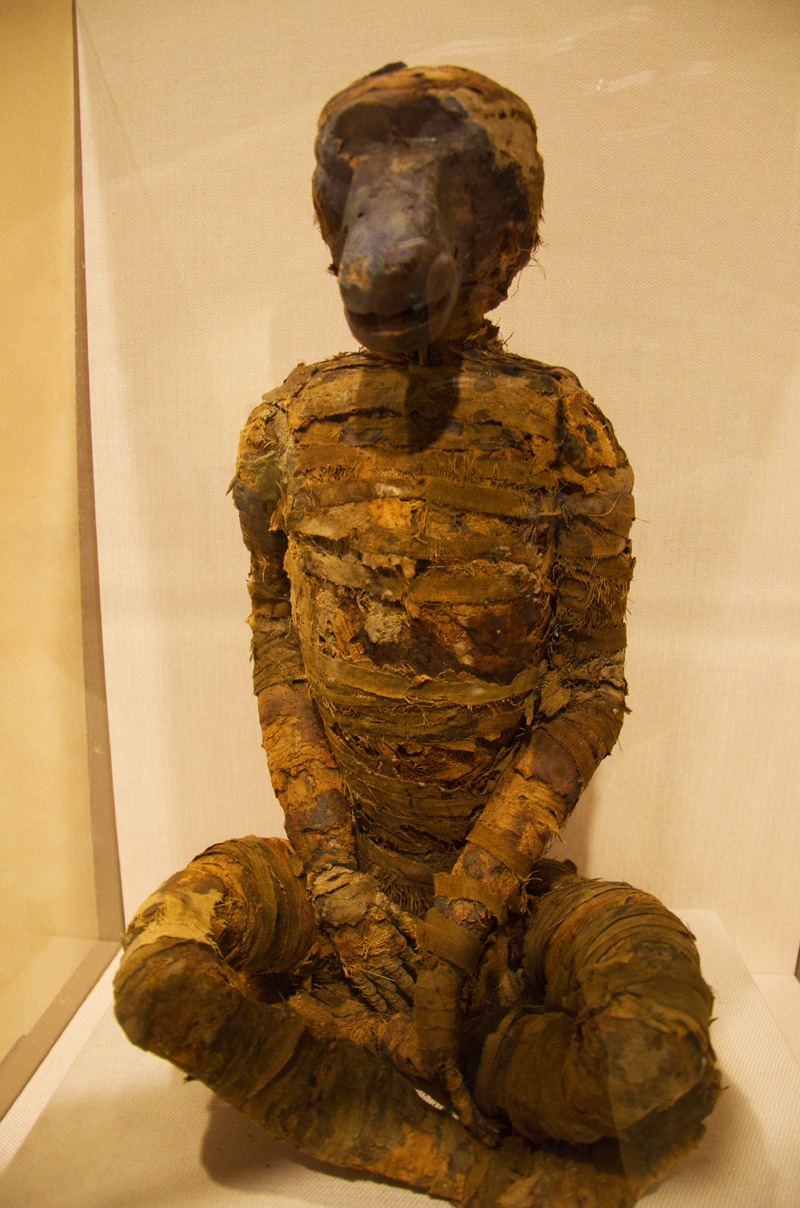
Baboon Mummy
Just enough information is offered to inform and intrigue about aspects of ancient Egyptian life—mummification (including that of animals such as the much-revered cats that were part of nearly every home) and other burial practices, everyday household items and their uses, the roles of pharaohs, and the pantheon of gods and goddesses they worshipped.
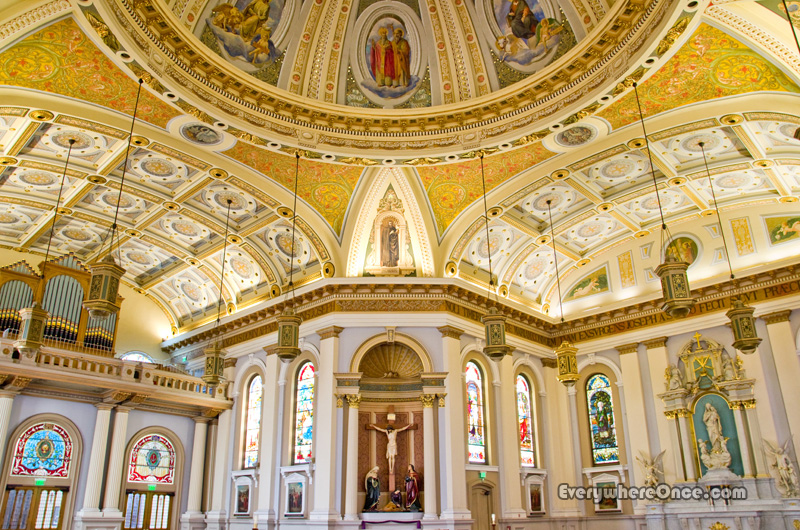
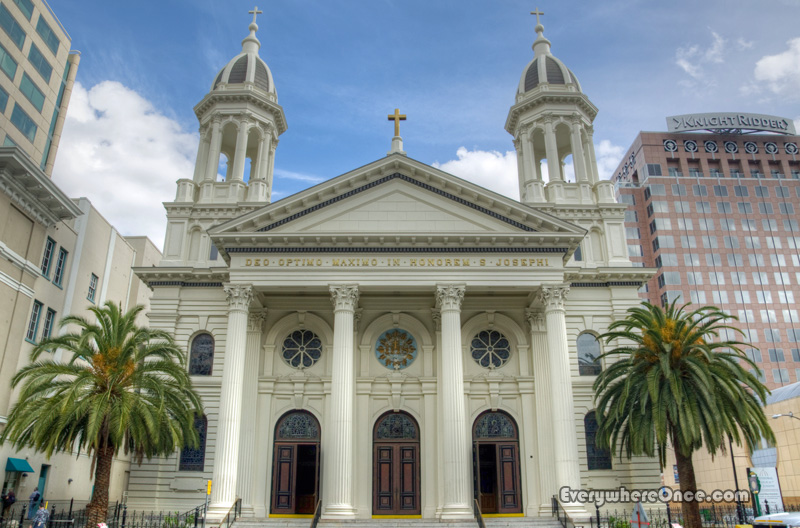
The Cathedral Basilica of St. Joseph
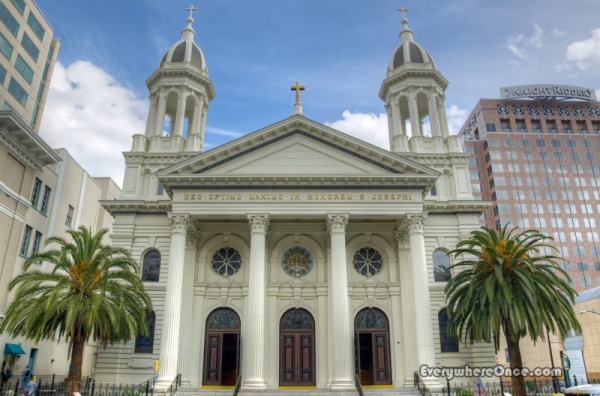
Even the non-religious can worship architectural beauty. The Cathedral Basilica of St. Joseph has the hallmarks of a grandiose Catholic church—stained glass, marble, murals, statuary. The sum of the whole is greater and more vivid than those we’ve seen at other churches and cathedrals across the country. Instead of one dome there are four, while vaulted ceilings stretch skyward.
The current incarnation of St. Joseph, which began as a modest adobe structure, dates to the late 1800s and is the fourth one constructed on this site. The others were destroyed by earthquake or fire. The cathedral is still in use as a place of worship and a performance venue for choral and music ensembles, accompanied by a circa 1886 mechanical Odell organ, one of only four in the U.S.
After a day of admiring artifacts and architecture, we received word that the RV was outfitted with a brand-new battery and fit for the road once again. Music to our ears.
37.339386
-121.894955













 Everywhere Once